
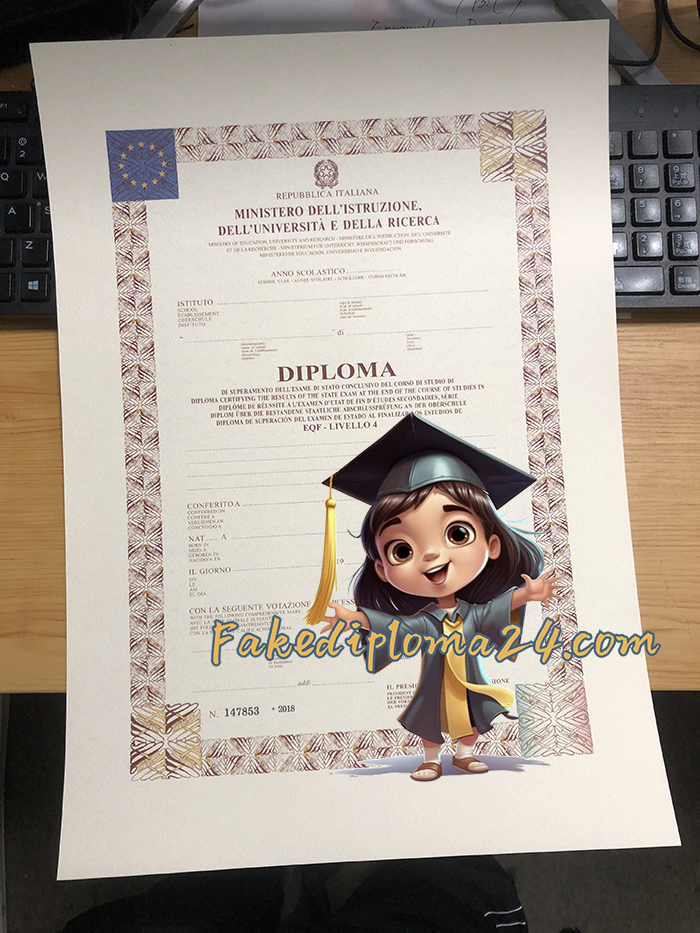
Italy’s high school system, known as Scuola Secondaria di Secondo Grado, is a sophisticated and highly specialized stage of education. Buy an Italian high school diploma. Order an Italian high school degree. Unlike the more generalized high school models found in North America, the Italian system requires students to make a definitive choice about their future career path or academic direction at the age of 14.
The journey lasts five years (from ages 14 to 19) and culminates in a rigorous national examination that is a rite of passage for every Italian youth.
1. The Three Main Pillars
The Italian system is divided into three distinct tracks. Each is designed to cater to different aptitudes, ranging from pure classical theory to hands-on technical mastery.
A. Liceo (Lyceum)
The Liceo is the academic track, designed primarily for students planning to attend university. It focuses on theoretical knowledge and humanities. There are several types:
-
Liceo Classico: The “crown jewel” of the Italian tradition, focusing on Ancient Greek, Latin, philosophy, and literature.
-
Liceo Scientifico: Focuses on mathematics, physics, and natural sciences, while still maintaining a strong foundation in the humanities.
-
Liceo Linguistico: Specialized in modern foreign languages and their respective cultures.
-
Liceo Artistico/Musicale: Dedicated to fine arts, architecture, or music.
B. Istituto Tecnico (Technical Institute)
These schools offer a blend of theoretical education and practical specialization. They are highly regarded for producing skilled professionals in fields like:
-
Economy and Marketing
-
Technology (Electronics, Information Technology, Mechanics)
-
Agriculture and Tourism Graduates from a Tecnico can either enter the workforce immediately as specialized technicians or continue to university (often in Engineering or Economics).
C. Istituto Professionale (Professional Institute)
This track is the most hands-on, focused specifically on preparing students for the labor market. It trains students in practical trades such as culinary arts (the famous Alberghiero), maintenance, social care, and craftsmanship.
2. The Curriculum Structure
Regardless of the track, the Italian high school experience is characterized by a “fixed” curriculum.
-
The “Classroom” Concept: In Italy, students do not move from room to room for different subjects. Instead, a group of 20–25 students (the classe) stays in the same room for the entire five years, and the teachers rotate. This creates incredibly strong social bonds—and sometimes intense social dynamics—among classmates.
-
Mandatory Subjects: Even in scientific tracks, students must study Italian Literature, History, and Philosophy. This “humanist” foundation is a point of national pride, ensuring that even a future engineer has a deep understanding of Dante Alighieri or the Enlightenment. How to obtain a high-quality diploma from the Marangoni Institute?
3. The School Week and Atmosphere
The rhythm of Italian school life is quite different from the “campus life” seen in movies:
-
Schedule: School typically runs from 8:00 AM to 1:00 PM or 2:00 PM, Monday through Saturday (though many schools are moving toward a five-day week with longer afternoons).
-
No Extracurriculars: Italian schools are strictly for academics. Sports, drama, and music clubs are usually managed by private associations outside of school hours.
-
Oral Examinations (Interrogazioni): One of the most stressful aspects of the system. Students are frequently called to the front of the class to answer questions orally for 15–30 minutes, testing not just memory but the ability to synthesize and argue a point.
4. The Grand Finale: Esame di Stato (Maturità)
The five-year cycle ends with the Maturità, a high-stakes national exam. It consists of:
-
First Written Test: An Italian language and composition exam (standardized nationally).
-
Second Written Test: A subject specific to the student’s track (e.g., Latin for Classico, Math for Scientifico).
-
The Oral Interview: A comprehensive interview before a commission of teachers, covering all subjects studied in the final year.
The maximum score is 100/100, and passing this exam is the prerequisite for entering any university or high-level professional field.
5. Summary: Why it is Unique
The Italian high school system is often criticized for being “old-fashioned” due to its heavy emphasis on memorization and theory. However, it is also praised for producing students with exceptional critical thinking skills and a broad cultural horizon.
An Italian high school graduate is expected to not only know their specific field but also to be a “cultured citizen” capable of discussing history, literature, and philosophy. It is a demanding, sometimes rigid, but deeply formative five-year marathon that shapes the identity of every Italian adult.